Table of Contents
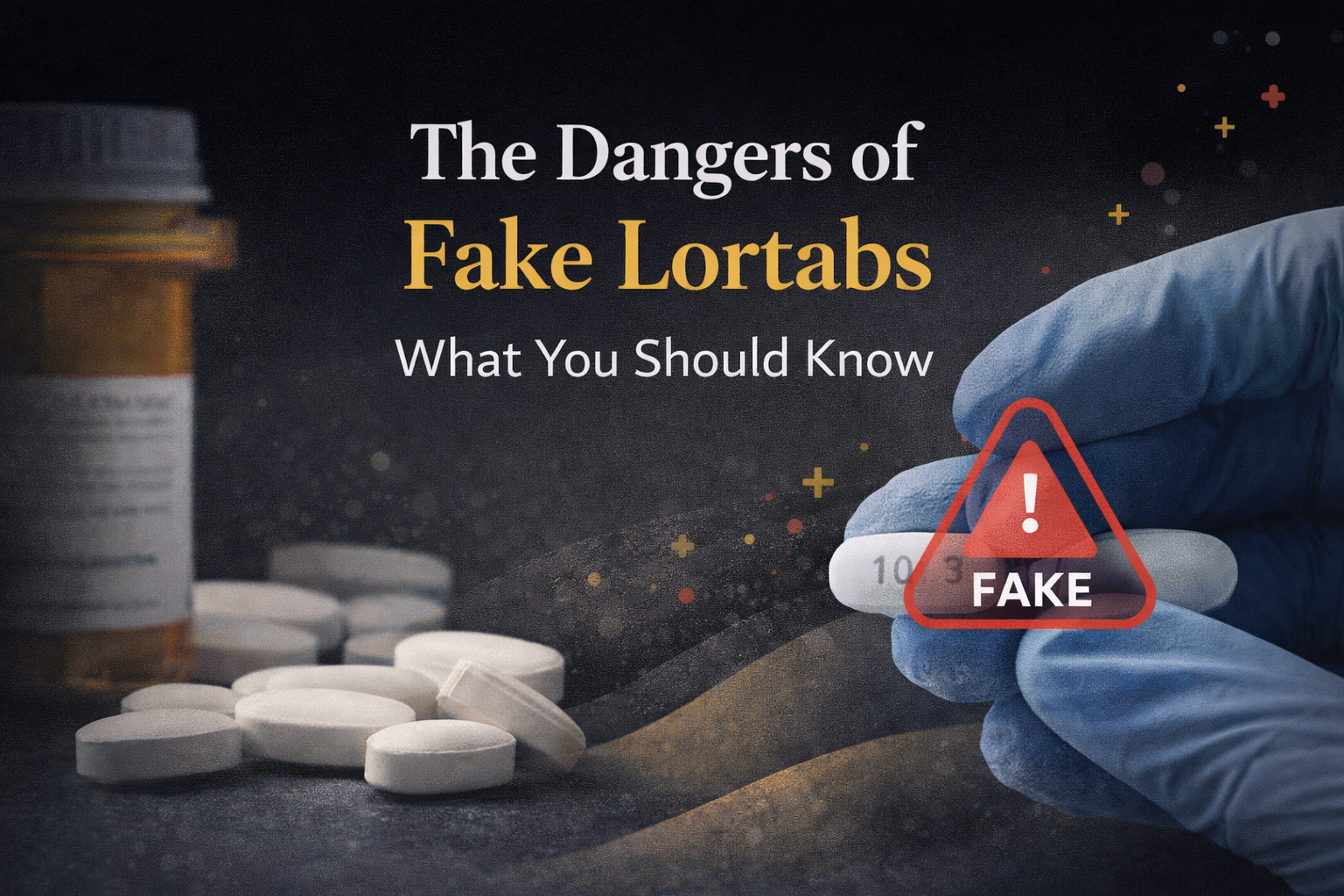
ToggleThe Dangers of Fake Lortabs: What You Should Know
Counterfeit pain pills are no longer rare. They are widespread, increasingly sophisticated, and often far more dangerous than people expect.
Among them, fake Lortabs have become a growing concern. These pills are designed to look identical to legitimate prescription hydrocodone products, yet they frequently contain entirely different substances.
For individuals managing pain, struggling with opioid dependence, or attempting to avoid withdrawal symptoms, understanding this risk is essential.
What Are Lortabs?
Lortabs are a prescription medication used for moderate to severe pain. They contain:
-
Hydrocodone, an opioid pain reliever
-
Acetaminophen, a non-opioid pain reliever that enhances the effect
When taken under medical supervision, hydrocodone-based medications can play a legitimate role in pain management.
Problems often arise when pills are obtained outside of licensed pharmacies or used outside medical guidance.
The Rise of Counterfeit Lortabs
Counterfeit pills have increased dramatically as access to legitimate prescriptions has tightened. These fake pills:
-
Often look nearly identical to real medication
-
Are sold online or through non-medical channels
-
May contain fentanyl, methamphetamine, or unknown substances
-
Are frequently produced without quality control
In many cases, people do not know they are taking a counterfeit pill until unexpected symptoms appear.
For broader safety guidance on counterfeit medications and harm reduction, you can read:
Dangers of Counterfeit Pills and How to Stay Safe
Why Fake Lortabs Are So Dangerous?
The most common and serious risk is fentanyl contamination.
Fentanyl is a synthetic opioid significantly more potent than hydrocodone. Even a small, unrecognized amount can lead to respiratory depression and overdose.
The danger is highest for:
-
Individuals without opioid tolerance
-
People returning to use after a period of abstinence
-
Those taking a pill for pain relief without expecting opioid exposure
Overdose risk increases when counterfeit pills are combined with alcohol, benzodiazepines, or other sedating substances.
This unpredictability is what makes counterfeit pills especially dangerous.
Can You Tell If a Lortab Is Fake?
In most cases, no.
Counterfeit pills are designed to mimic:
-
Shape
-
Color
-
Imprint markings
Even trained professionals cannot reliably identify a counterfeit pill by sight alone. The only reliable protection is obtaining medication directly from a licensed pharmacy.
When Withdrawal Becomes the Hidden Risk
Some individuals purchase pills from non-medical sources not for recreation, but to avoid withdrawal symptoms.
This is often a sign that opioid dependence has already developed.
If you are unsure whether symptoms are related to opioid withdrawal or exposure to counterfeit medication, understanding how opioids behave in the body may help clarify what is happening.
You may also find this overview helpful:
Dangers of Counterfeit Pills and How to Stay Safe
How RCNT Supports Safer Recovery
At the Center for Network Therapy, we regularly speak with individuals and families across New Jersey, including East Brunswick, Edison, Freehold, and West Orange, who are navigating concerns about opioid exposure, counterfeit pills, or withdrawal symptoms.
Our outpatient detox programs provide medical supervision for opioid stabilization while allowing individuals to remain at home and connected to daily responsibilities.
We work with many insurance plans, including Horizon, Aetna, other private insurers, and Medicaid. Clarifying coverage early often removes one of the biggest barriers to seeking help.
Outpatient care may be appropriate for individuals who need medical oversight but do not require residential admission.
When to Seek Medical Support?
Consider speaking with a medical professional if you have:
-
Purchased pills outside of a licensed pharmacy
-
Experienced unexpected sedation or unusual side effects
-
Used opioids to prevent withdrawal symptoms
-
Concerns about dependence or overdose risk
Early medical evaluation can reduce the risk of complications.
You can call 732-484-9661 to ask questions about outpatient detox options and insurance coverage.
You may also take our confidential detox quiz to explore next steps privately.
FAQ
What happens if a fake Lortab contains fentanyl?
If a counterfeit pill contains fentanyl, it can cause slowed breathing, loss of consciousness, and overdose. The risk is especially high for individuals without opioid tolerance.
Are counterfeit opioid pills common in New Jersey?
Yes. Counterfeit pills have been identified across New Jersey and nationwide. Pills sold outside licensed pharmacies carry significant risk due to unknown contents.
Can someone overdose without knowing they took fentanyl?
Yes. Many overdoses occur because individuals believe they are taking hydrocodone or another medication when the pill actually contains fentanyl.
Is outpatient detox enough for opioid dependence?
Outpatient detox can be appropriate for many individuals, depending on medical history, use patterns, and support systems. A medical assessment helps determine whether outpatient care is safe and effective.
How RCNT Supports Safer Recovery?
At the Center for Network Therapy, we regularly speak with individuals and families across New Jersey, particularly in East Brunswick, Edison, Freehold, and West Orange, who are navigating concerns about opioid exposure, counterfeit pills, or withdrawal symptoms.
Many of these conversations begin with uncertainty. Someone took a pill that did not feel right. Symptoms appeared faster or stronger than expected. Or withdrawal became harder to manage.
Our outpatient detox program provides medical supervision for opioid stabilization while allowing individuals to remain at home and connected to work, school, or family responsibilities.
We work with many insurance plans, including Horizon, Aetna, other private insurers, and Medicaid. Clarifying coverage early often removes one of the biggest barriers to seeking care.
If you are exploring support in New Jersey, especially in the Middlesex County or surrounding areas, a brief medical conversation can help determine whether outpatient detox is appropriate.