Table of Contents
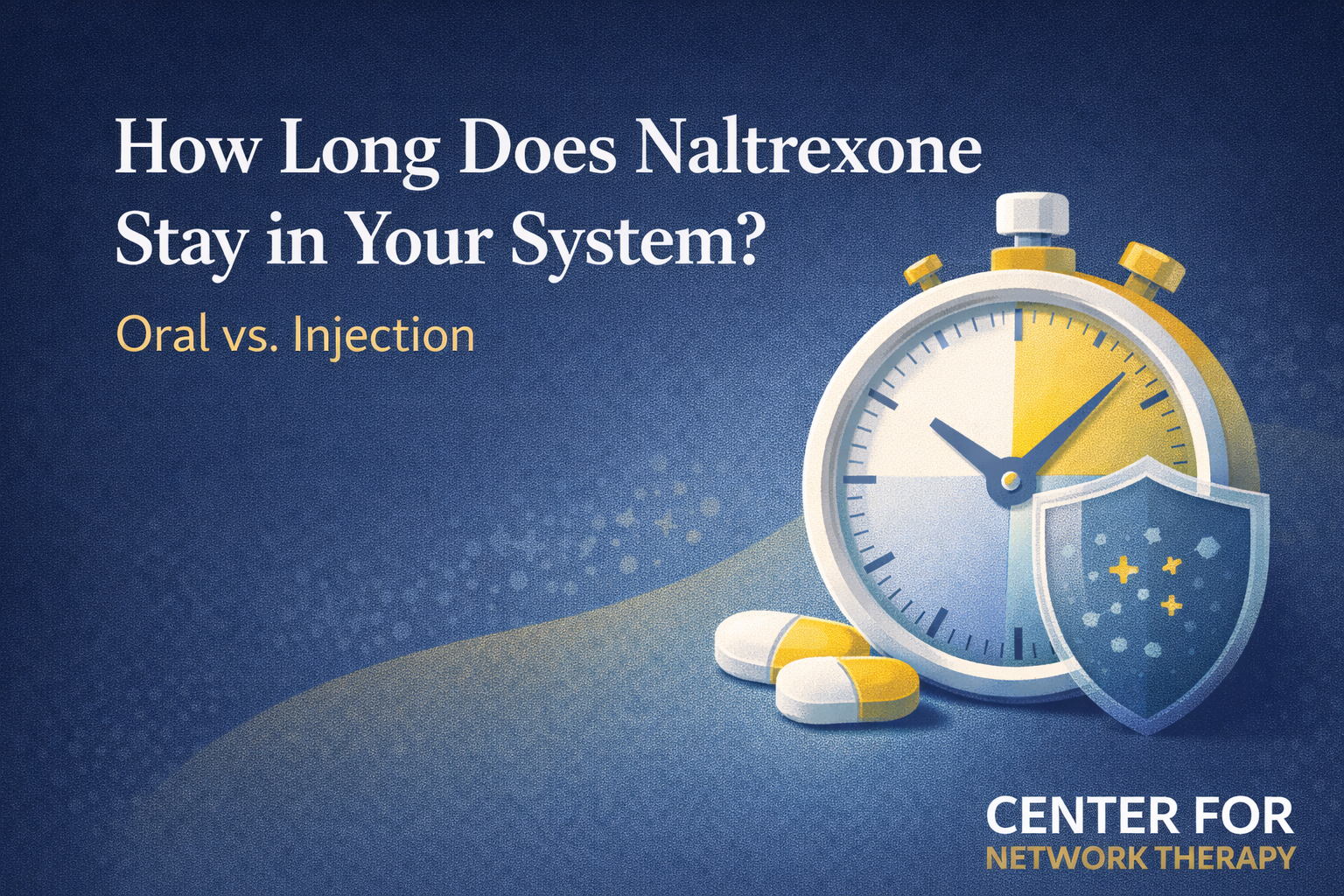
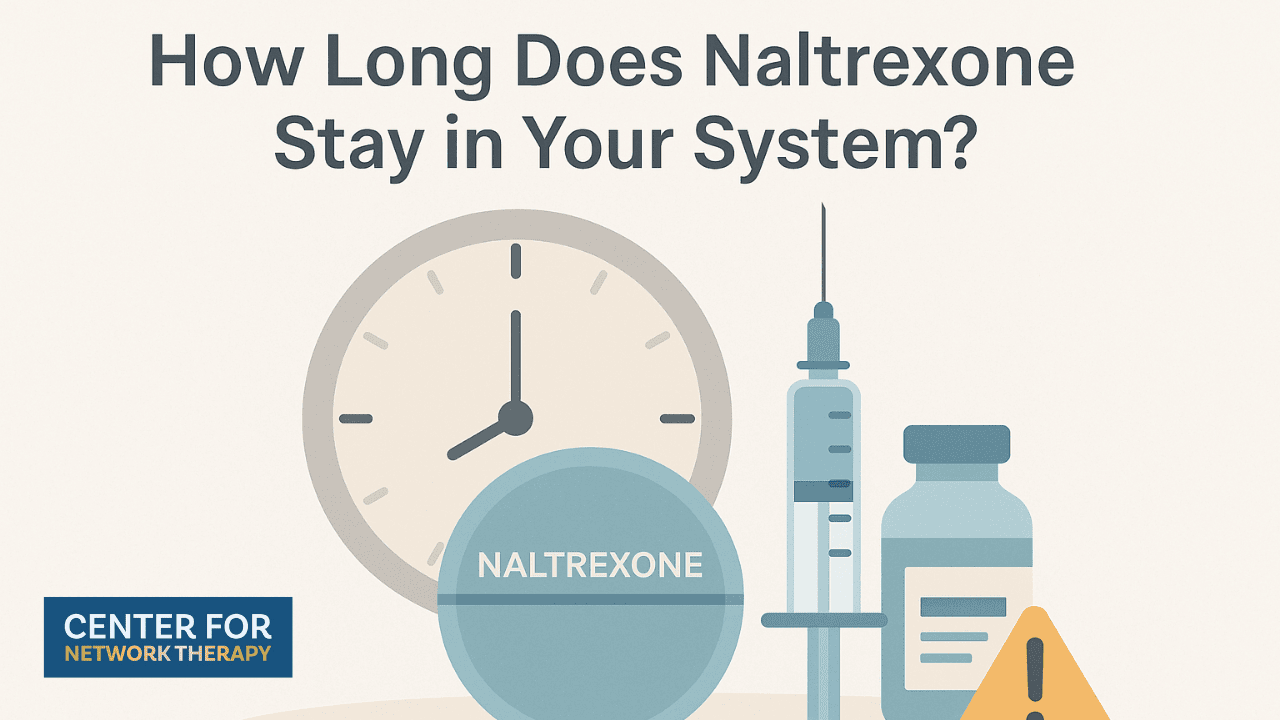
ToggleHow Long Does Naltrexone Stay in Your System?
Naltrexone is often prescribed during recovery from alcohol or opioid use disorders. It does not reduce withdrawal symptoms directly. Instead, it blocks opioid receptors, which prevents alcohol and opioids from producing their usual euphoric effects.
Many people search this question during transitions:
• Before starting the medication
• Before stopping it
• Before surgery
• After missing a dose
Understanding how long naltrexone remains active helps prevent complications and supports safer recovery planning.
What Is Naltrexone Used For?
Naltrexone is an opioid antagonist. It blocks opioid receptors without activating them.
It is prescribed for:
Alcohol Use Disorder (AUD)
Helps reduce the reinforcing effects of alcohol.
Opioid Use Disorder (OUD)
Prevents opioids from producing a high if relapse occurs.
Unlike methadone or buprenorphine, naltrexone does not create physical dependence. It is not addictive.
Forms of Naltrexone and Half-Life
Naltrexone comes in two primary forms.
Oral Tablet (ReVia, Depade)
• Taken daily
• Half-life approximately 4 hours
• Functional blocking effects last longer due to metabolites
Extended-Release Injection (Vivitrol)
• Given once every 28 days
• Half-life approximately 5 to 10 days
• Gradual release over several weeks
The injection remains active longer because it is designed to release slowly into the bloodstream.
How Long Does Naltrexone Stay in the Body?
Oral naltrexone
Usually cleared within 3 to 4 days.
Extended-release injection
Can remain active for 28 to 30 days.
Several factors influence duration:
• Liver function
• Dosage
• Frequency
• Age
• Metabolism
• Other medications
Because naltrexone affects opioid receptors, timing matters if pain medication or surgery is involved.
Detection Windows
Naltrexone is not included in routine drug screens.
If specifically tested:
• Urine: Up to about 6 days (oral form)
• Blood: About 24 hours
It is not a controlled substance and has no abuse potential.
Why Duration Matters in Recovery
Medication planning is rarely isolated. Many individuals beginning naltrexone first complete detox.
Understanding how long substances stay in the system often helps explain medication timing. For example, stimulant metabolism timelines can affect treatment planning. You can read more here:
How Long Does Cocaine Stay in Your System?
While cocaine and opioids are different, understanding substance clearance windows supports safer transitions.
When Professional Guidance Is Important
Because naltrexone blocks opioids:
• Opioid pain medications may not work
• Attempting to override the blockade is dangerous
• Surgery planning requires disclosure
• Stopping abruptly should be medically guided
At the Center for Network Therapy, we regularly speak with individuals across New Jersey, including East Brunswick, Edison, Freehold, and West Orange, who are navigating medication decisions alongside recovery.
Our outpatient detox programs allow individuals to stabilize medically while remaining at home and connected to work or family.
We work with many insurance plans, including Horizon, Aetna, other private insurers, and Medicaid. Insurance transparency is often the biggest barrier to starting care, and those questions can be addressed before any commitment is made.
A Clearer Way to Move Forward
Medication-assisted recovery is structured. It is deliberate. It is monitored.
Understanding how long naltrexone stays in your system helps reduce uncertainty during treatment transitions.
Recovery planning does not have to feel disruptive. It can be medically supervised, steady, and built around your daily life.
FAQ
Can I drink alcohol while on naltrexone?
Naltrexone reduces alcohol’s rewarding effects but does not prevent intoxication. Drinking can still impair coordination and judgment.
How long after stopping naltrexone can opioids work again?
Timing depends on the form used. Oral naltrexone clears faster than the extended-release injection. A medical provider should guide this transition.
Is naltrexone addictive?
No. Naltrexone does not activate opioid receptors and has no abuse potential.
Do I need to detox before starting naltrexone?
For opioid use disorder, individuals must be opioid-free before starting to avoid precipitated withdrawal. A medical evaluation determines readiness.
Considering Your Next Step
If you are planning to start or stop naltrexone, or have questions about how it fits into recovery, speaking with a provider can clarify timing and safety.
Many people from East Brunswick, Edison, Freehold, and West Orange begin with questions rather than decisions.
You can call 732-484-9661 to ask about outpatient detox options, medication planning, and insurance coverage.
You may also take our confidential detox quiz to explore next steps privately.