Table of Contents
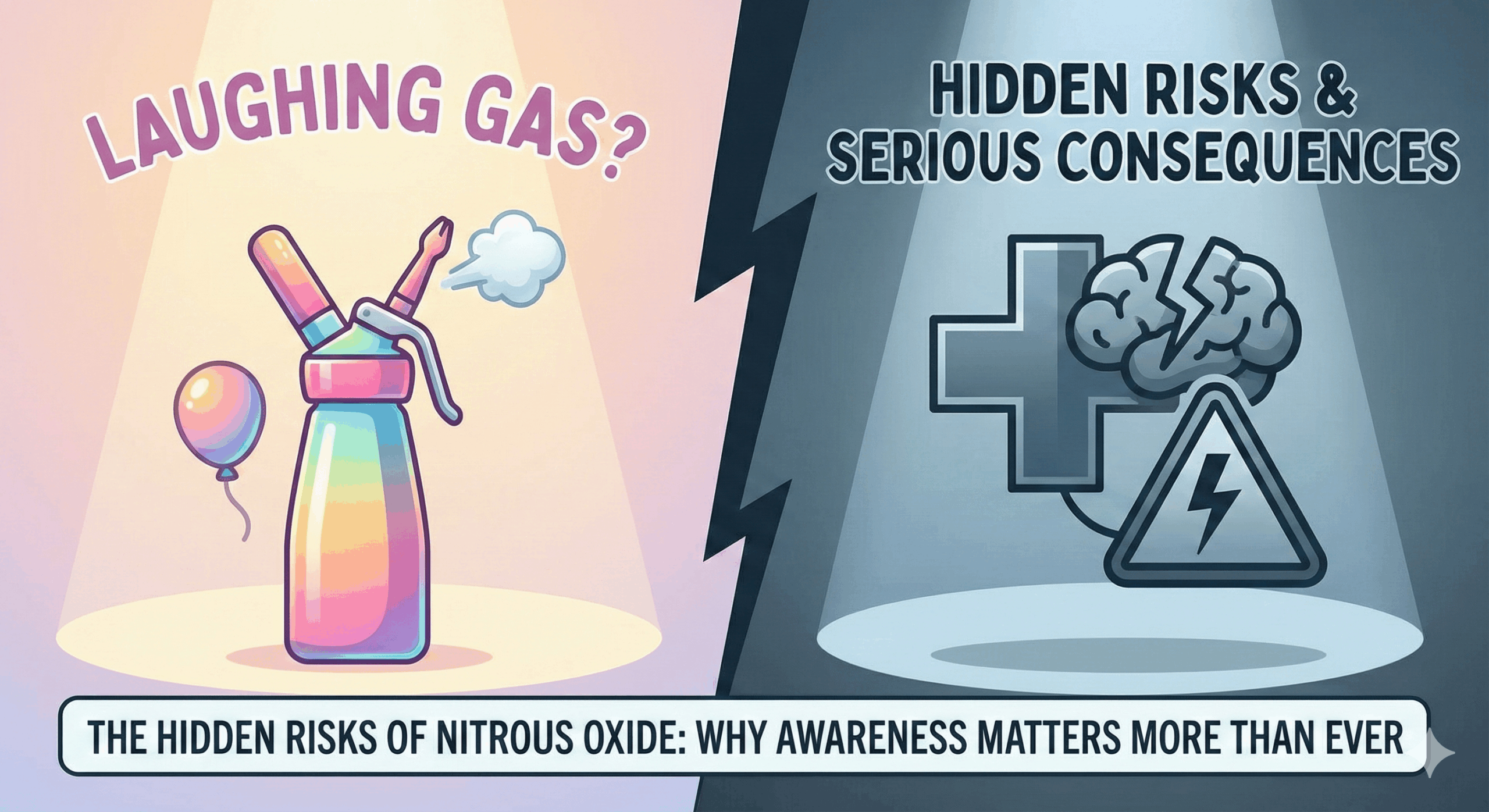
ToggleThe Hidden Risks of Nitrous Oxide: Why Awareness Matters More Than Ever
Most people recognize nitrous oxide as “laughing gas” from a dentist’s office or as the propellant that helps whipped cream come out of a can. Because of that familiarity, it rarely raises alarm. But across the country, nitrous oxide is showing up in situations far removed from medical care or food preparation, and the consequences have been far more serious than many expect.
At the Center for Network Therapy (CNT), we speak to individuals and families every week who are facing substance-related crises they never saw coming. Nitrous oxide misuse is one of those emerging concerns ; often underestimated, often misunderstood, and increasingly linked to medical emergencies, accidents, and long-term neurological harm.
Why Nitrous Oxide Misuse Has Become a Growing Concern
Although possession for recreational use is illegal in many states, nitrous oxide can still be purchased easily at gas stations, vape shops, and online vendors. The packaging often looks harmless. The labels say “for food use only.” The canisters come in bright colors with playful branding.
But the accessibility of these products, especially in large tank-style containers, has contributed to rising misuse among teenagers and young adults. Medical professionals now describe nitrous oxide dependence as far more common and more severe than previously understood.
What Makes Recreational Use Dangerous?
Nitrous oxide is not just a short-lasting “party drug.” Its risks include:
Loss of consciousness.
Inhaling directly from a tank or repeating inhalations rapidly can cause sudden blackout, which is why nitrous oxide is increasingly linked to traffic accidents and falls.
Neurological damage.
Chronic use inactivates vitamin B12 in the body, leading to nerve damage, difficulty walking, numbness, and in severe cases, paralysis.
Psychological dependence.
While the high lasts seconds, the compulsion to continue inhaling can lead to repeated, rapid use that strains the nervous system and increases harm.
Risk of suffocation or frostbite.
Improper use ; such as inhaling from bags or directly from cold canisters; can cause acute physical injury.
For families, what makes nitrous oxide particularly concerning is how quickly it can shift from seemingly harmless to life-altering.
Why This Issue Is Often Overlooked
Nitrous oxide doesn’t fit the common image of a “street drug.” There are no pills, no powders, and no typical warning signs. Many people who misuse it are not aware of the long-term dangers. And because the high is brief, the harm is often invisible until it becomes severe.
Add to this the lack of consistent regulations around sales, and it becomes clear why communities are reporting rising injuries, hospitalizations, and in some cases, fatalities.
How CNT Approaches Conversations Around Emerging Substance Risks
CNT does not provide nitrous oxide–specific detox because the needs vary widely and misuse often co-occurs with other substances. But we do support individuals and families who are trying to understand what happened, how to move forward, and what steps may help reduce further harm.
Our team emphasizes:
- Nonjudgmental conversations that help people speak openly
- Education on emerging substances so families can stay informed
- Trauma-informed care for individuals navigating complicated substance use
- Supportive outpatient detox for opioids, alcohol, benzodiazepines, and other substances where structured medical care is required
Substance trends change. Our commitment to clear, compassionate guidance does not.
If You’re Worried About Someone, You’re Not Alone
Safety begins with awareness. If you’re concerned about nitrous oxide misuse in your home, your school, or your community, it’s okay to seek support or ask questions.
📞 Call us at 732-484-9661
📝 Take our confidential detox quiz to explore available care
Staying informed can save lives; and every family deserves that chance.