Table of Contents
ToggleIs Benadryl Addictive for Sleep?
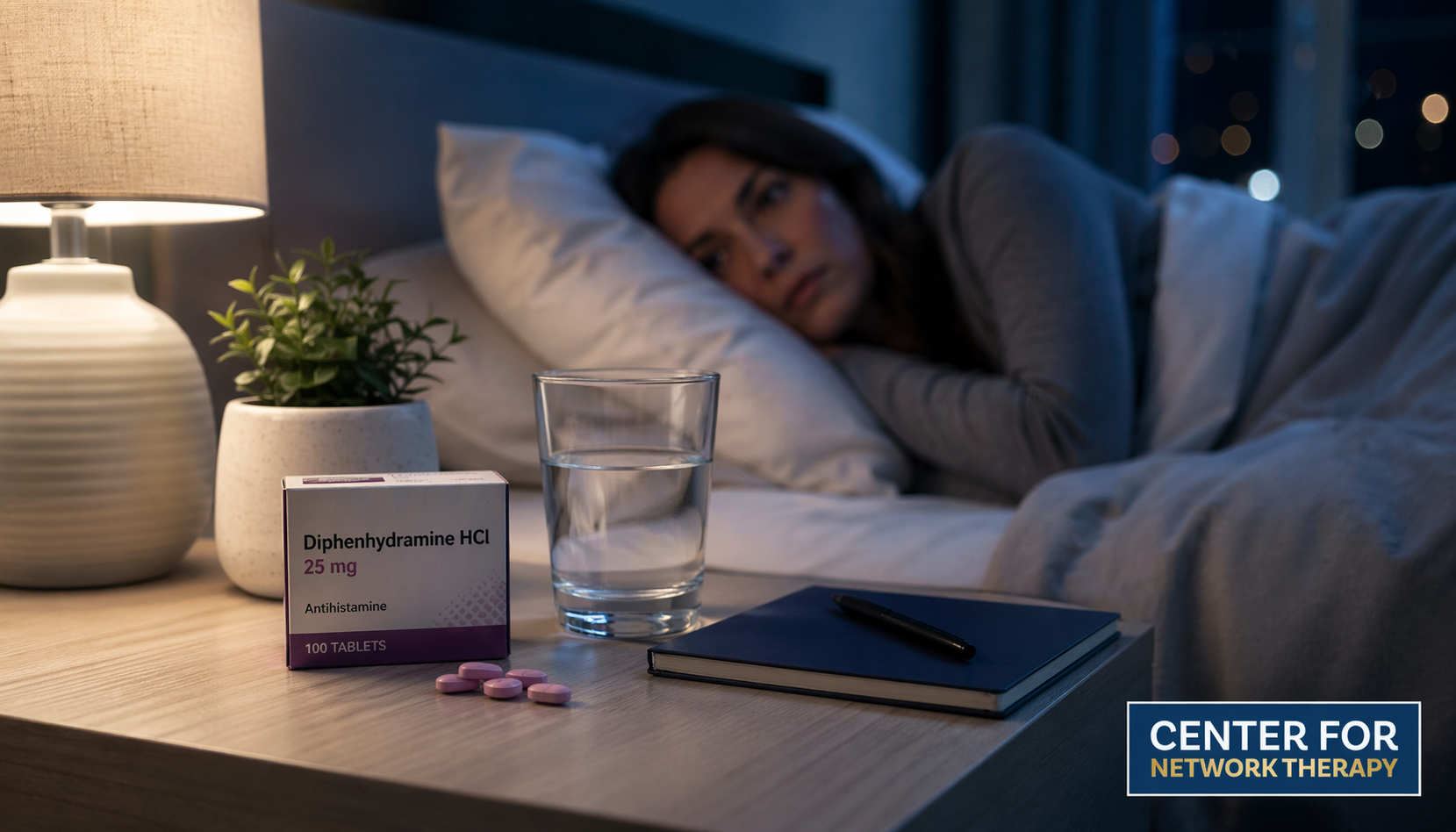
Benadryl is a common over-the-counter medication. Most people use it for allergies, colds, or itching.
But many also use it for something else. Sleep.
That drowsy feeling it creates can feel like an easy fix after a long day. Over time, though, that habit can turn into something harder to manage.
Why Benadryl Makes You Sleepy
Benadryl contains diphenhydramine.
It works by blocking histamine, a chemical involved in allergic reactions. At the same time, it affects another system in your brain. This creates a sedative effect.
That’s why you feel calm.
That’s why you feel sleepy.
For occasional use, this may not be a problem. But using it regularly for sleep changes how your body responds.
Can You Get Addicted to Benadryl?
Yes, but not in the way people usually think.
Benadryl does not typically cause strong physical addiction like opioids or alcohol. What it does create is psychological dependence.
You start to rely on it to fall asleep.
Then you feel like you cannot sleep without it.
That belief becomes the problem.
- You take it every night
- Sleep feels impossible without it
- Anxiety builds if you skip a dose
This loop keeps the habit going.
How Dependence Builds Over Time
At first, one dose works.
Then your body adapts.
You may notice:
- It takes longer to fall asleep
- You wake up during the night
- The same dose feels weaker
So you increase the dose.
This is tolerance. And it’s often the point where occasional use turns into misuse.
Side Effects of Benadryl Misuse
Using Benadryl often or in higher doses can affect more than your sleep.
You may experience:
- Anxiety or restlessness
- Increased heart rate
- Poor focus
- Memory problems
- Blurred vision
- Dry mouth
- Nausea
- Constipation
- Trouble urinating
- Poor coordination
In more serious cases:
- Seizures
- Liver issues
Long-term use has also been linked to cognitive decline. Some studies suggest a connection between frequent use of anticholinergic drugs and increased risk of dementia.
What Happens When You Stop Using It
Stopping Benadryl is not usually dangerous.
But it can feel uncomfortable.
Common symptoms include:
- Trouble sleeping
- Nausea
- Sweating
- Mild digestive issues
Sleep often feels worse before it improves. That’s because your body is adjusting.
Tapering slowly tends to feel easier than stopping suddenly.
When Sleep Becomes the Real Issue
If you need Benadryl every night, the issue may not be sleep itself.
It could be:
- Stress
- Anxiety
- Poor sleep habits
- Irregular routine
This is where looking deeper matters.
If sleep struggles connect with emotional stress or substance use patterns, it helps to explore that fully. You can start here
Take a Step Back and Check In
If you are unsure whether your use is becoming a problem, start small.
Ask yourself:
- Do I feel anxious without it?
- Have I increased my dose?
- Am I relying on it every night?
If yes, it may be time to pause and reassess.
You can also take a quick, private self-check here
FAQs
Is it safe to take Benadryl every night for sleep?
Occasional use may be fine. Daily use can lead to tolerance and dependence. It’s not designed as a long-term sleep solution.
Can Benadryl cause real addiction?
It usually leads to psychological dependence rather than physical addiction. You may feel like you need it to sleep.
Why does Benadryl stop working after some time?
Your body adapts. This reduces its sedative effect, leading to higher doses for the same result.
What is a better long-term option for sleep?
Focus on sleep habits first. If needed, speak with a professional about safer options.
What should I do if I can’t sleep without it?
Start by reducing use slowly. If it feels difficult, professional support can help you rebuild natural sleep patterns.