Table of Contents
ToggleTramadol vs Oxycodone: What Sets Them Apart?
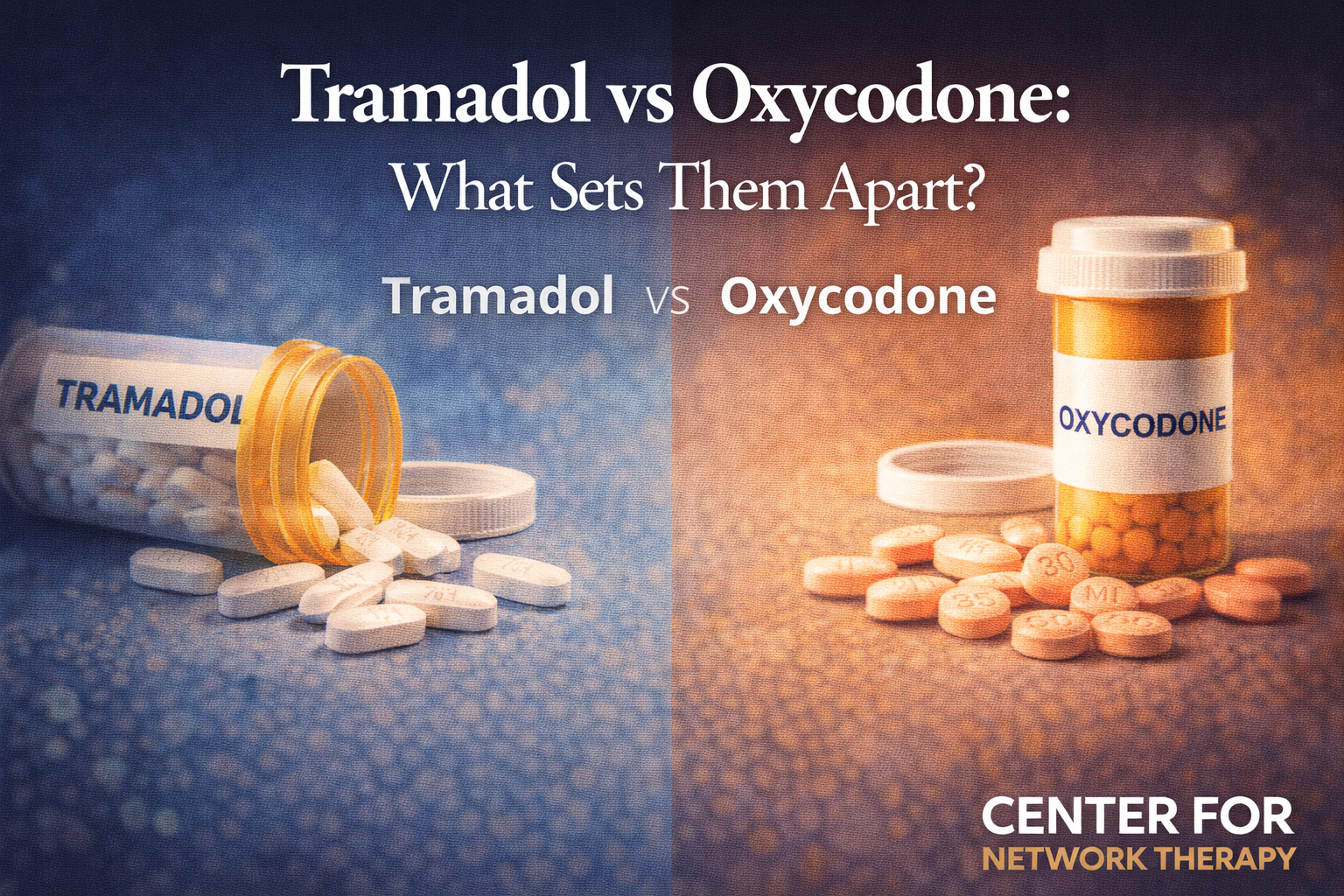
Tramadol and oxycodone are both used to treat pain. On the surface, they seem similar. Both are opioids. Both require a prescription. Both can be misused.
But once you look closer, the differences become clear.
They vary in strength, how fast they work, and how likely they are to lead to addiction. Understanding this matters, especially if you or someone close to you has been prescribed one of them.
How These Drugs Work in the Body
Both tramadol and oxycodone act on the central nervous system. They attach to opioid receptors in the brain and reduce how pain is felt.
That’s where the similarity ends.
Tramadol has a dual effect. It not only works on opioid receptors but also influences serotonin and norepinephrine. This gives it a mild mood-altering effect.
Oxycodone works as a direct and strong opioid agonist. It focuses purely on pain relief. This makes it more powerful but also riskier.
Which One Is Stronger?
Oxycodone is significantly stronger than tramadol.
It acts faster. It delivers more intense pain relief. That’s why it is often prescribed for moderate to severe pain.
Tramadol is considered a weaker opioid. It’s usually given for mild to moderate pain or when doctors want to avoid stronger opioids.
If you’re comparing them directly, oxycodone has more impact. But that also means it comes with higher risks.
Speed and Effect: Why It Matters
Oxycodone starts working quickly. In some cases, within 15 to 30 minutes.
Tramadol takes longer. You may not feel its full effect for up to an hour.
This difference plays a role in misuse.
Drugs that act faster tend to have a higher abuse potential. The quick relief can create a stronger psychological pull.
That’s one reason oxycodone carries stricter control.
Risk of Addiction and Dependence
Both medications can lead to dependence. But the level of risk is not the same.
Oxycodone is classified as a Schedule II drug. This means it has a high potential for abuse and addiction.
Tramadol falls under Schedule IV. The risk is still there, but lower in comparison.
Still, “lower risk” does not mean safe.
People often underestimate tramadol. That can lead to misuse. Over time, even a milder opioid can create dependency.
If you want to understand how overdose risks can show up with tramadol, this can help
Side Effects You Might Notice
Since both are opioids, many side effects overlap.
Common ones include:
-
Nausea
-
Constipation
-
Dizziness
-
Drowsiness
-
Headaches
There are also some key differences.
Tramadol carries a unique risk of seizures, even at prescribed doses in some cases. This makes it risky for people with a seizure history.
Oxycodone, being stronger, has a higher chance of causing respiratory depression. That’s when breathing slows down, which can become dangerous.
Overdose Risk: What Increases It
Both drugs can lead to overdose. The risk increases when:
-
Higher doses are taken
-
They are mixed with alcohol
-
They are combined with other sedatives
This combination slows down the nervous system too much. In severe cases, it can stop breathing.
Even if someone is taking medication as prescribed, mixing substances without guidance can quickly become dangerous.
Which One Is More Effective?
It depends on the situation.
Oxycodone is more effective for intense pain. It’s often used after surgery or injury.
Tramadol works well for less severe pain or when long-term opioid use needs to be limited.
Effectiveness is not just about strength. It’s about the right fit for the condition.
When to Be Careful
Pay attention to patterns, not just doses.
Early signs of misuse can look like:
-
Taking more than prescribed
-
Using it for reasons beyond pain relief
-
Feeling dependent on it to get through the day
-
Experiencing withdrawal when stopping
These signs often show up before a serious problem is obvious.
Take a Confidential Self-Check
If you’re unsure where you stand, start here
It’s quick, confidential quiz that gives you a clearer picture!
FAQs
Is tramadol safer than oxycodone?
It carries a lower risk of addiction, but it is not risk-free. It can still lead to dependence and has its own side effects, including seizures.
Can both drugs be addictive?
Yes. Both affect the brain’s reward system. Misuse can lead to dependence over time.
Why is oxycodone considered more dangerous?
It is stronger and acts faster. This increases both addiction and overdose risk.
Can I take them together?
Doctors usually avoid prescribing them together. Combining opioids can increase side effects and risk.
What should I do if I feel dependent?
Don’t ignore it. Start by understanding your usage patterns. Then consider speaking to a professional or taking a confidential assessment.