Table of Contents
ToggleWhat Is a Bad Trip?
A “trip” refers to the effects of psychedelic drugs that alter perception, mood, and thinking.
These substances can make you feel like you’re in a completely different reality. Sounds, visuals, and emotions can all feel amplified or distorted.
A bad trip is when that experience turns negative.
Instead of curiosity or euphoria, the person may feel fear, confusion, or emotional distress. Time can feel slowed down. Thoughts may spiral. Even familiar surroundings can start to feel unsafe or unreal.
What Causes a Bad Trip?
A bad trip does not always have a single cause. It often comes from a mix of mental state, environment, and the substance itself.
Some common triggers include:
- Taking a higher dose than the body can handle
- Feeling anxious, low, or emotionally unsettled before using
- Being in loud, crowded, or overstimulating environments
- Mixing substances, especially alcohol with psychedelics
- Not having a trusted person around
- Dehydration or physical discomfort
Even experienced users are not immune. Someone can have many “good” trips and still suddenly experience a bad one without warning.
Substances That Can Lead to a Bad Trip
Any drug that changes perception can lead to a bad trip.
Common examples include:
- LSD, often known as acid, which strongly alters perception
- DMT, known for intense and fast experiences
- Psilocybin mushrooms, often called shrooms
- MDMA, commonly used in party settings
- Salvia, which can create very intense short experiences
- Cannabis, which in some cases can trigger anxiety or panic
Each substance affects the brain differently. The intensity and duration of the experience can vary a lot.
Signs and Symptoms of a Bad Trip
A bad trip can look different for each person. Still, some patterns show up often.
You may notice:
- A feeling that time has stopped or slowed down
- Racing or negative thoughts that feel hard to control
- Strong paranoia or fear
- Sudden mood shifts
- Disturbing visuals or sounds
- Feeling disconnected from reality
If you see someone experiencing these signs after using a substance, they may be having a bad trip.
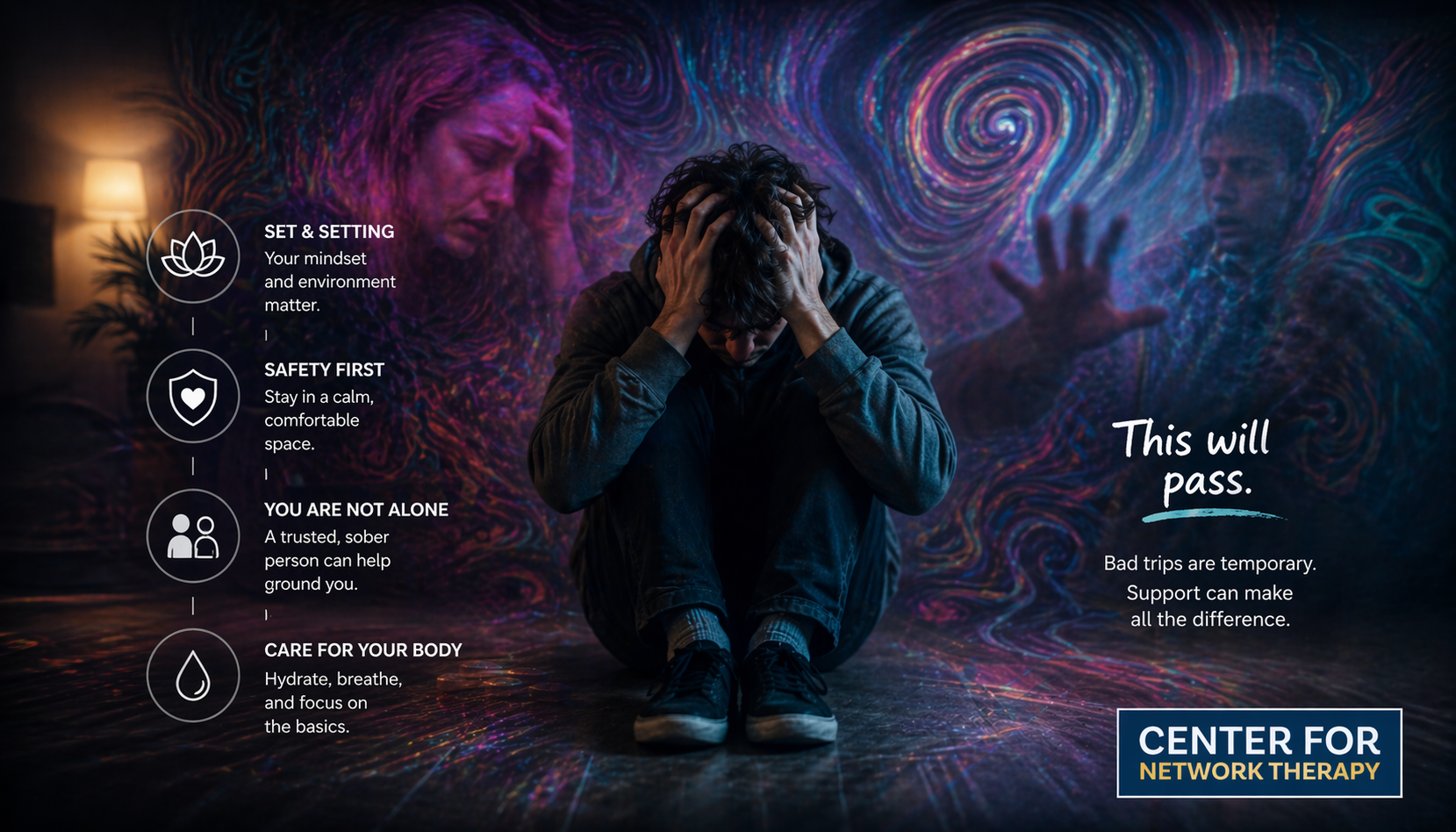
How to Handle a Bad Trip
You may not be able to stop a bad trip instantly. But you can reduce how intense it feels.
Start by changing the environment.
- Move to a quiet, calm space
- Reduce noise and bright lights
- Sit or lie down in a safe place
Stay with someone you trust.
- A calm, sober person can help ground you
- Simple reassurance often helps more than long conversations
Focus on basic needs.
- Drink water
- Slow your breathing
- Remind yourself that the feeling will pass
In more intense cases, medical help may be needed. Hospitals can provide support and medication if symptoms become overwhelming or unsafe.
If you want to understand treatment pathways linked to substances like LSD, you can explore this here
Why Set and Setting Matter More Than You Think
Many bad trips begin before the substance is even taken.
Your mindset matters.
Your surroundings matter.
If someone is already feeling anxious or unsafe, the experience can amplify that feeling.
That’s why preparation, awareness, and support play a big role in reducing risk.
When It’s More Than Just a Bad Trip
Sometimes, a bad trip is not just a one-time experience.
It can:
- Trigger ongoing anxiety
- Lead to fear around reality or perception
- Connect with deeper emotional struggles
If substance use becomes a pattern, it may help to step back and look at the bigger picture.
You can start with a private self-check here
FAQs
How long does a bad trip last?
It depends on the substance. Some last a few hours. Others can feel longer, especially if anxiety is high.
Can a bad trip cause long-term effects?
Most pass with time. In some cases, people may experience lingering anxiety or mood changes.
What is the fastest way to calm a bad trip?
Reduce stimulation, stay in a safe place, and have someone calm nearby. Breathing slowly helps.
Is it dangerous to leave someone alone during a bad trip?
Yes. It’s better to stay with them. They may feel confused or scared and need reassurance.
Should you go to the hospital for a bad trip?
If symptoms feel extreme, unsafe, or out of control, medical help is the right step.