Introduction
Nitazene opioids are a group of synthetic 2-benzylbenzimidazole opioid analogues that have appeared in the unregulated drug supply in recent years. They can be substantially more potent than older opioids, are often mixed with fentanyl or pressed into counterfeit pills, and present special challenges for overdose response and outpatient treatment planning. This article explains what is known about nitazene potency and overdose risk, emergency response recommendations, and practical considerations for outpatient detox and medication-based treatment. This information is educational and not individualized medical advice.
Table of Contents
ToggleWhat are nitazene opioids?
Nitazenes are a chemical family of synthetic opioids originally described in the 1950s. Multiple analogues have emerged illicitly since about 2019, including isotonitazene, metonitazene, protonitazene, and etonitazene, among others. Many have no accepted medical use and have been placed into Schedule I at the federal level. They have been identified in powders, counterfeit pills, and in mixtures with fentanyl, heroin, or stimulants. (pmc.ncbi.nlm.nih.gov)
How potent are nitazenes, and why does potency matter?
Potency describes how much of a drug is required to produce a given biological effect. Laboratory and animal studies, plus forensic case reports, indicate that nitazene analogues vary widely in potency. Some nitazenes (for example etonitazene and isotonitazene) have shown greater activity at the mu opioid receptor than fentanyl in preclinical assays, while others are less potent. Reported forensic blood concentrations associated with fatal cases are often in the low nanogram per milliliter range. These findings mean small amounts can cause severe respiratory depression and fatal overdose. (pmc.ncbi.nlm.nih.gov)
| Substance | Typical potency vs morphine (summary) | Clinical implication |
|---|---|---|
| Nitazenes (varies by analogue) | Variable: some analogues reported similar to or above fentanyl; some reports cite up to ~40 times fentanyl-level potency for specific compounds in select studies and local reports. | Even small, unrecognized quantities can cause severe respiratory depression; potency varies by analogue and sample. Testing may not detect all analogues. (pmc.ncbi.nlm.nih.gov) |
| Fentanyl | Roughly 50 to 100 times morphine in many references. | High potency, rapid respiratory depression; frequently implicated in current overdose deaths. (cdc.gov) |
| Morphine | Reference standard for comparisons. | Lower potency; different risk profile for respiratory depression at equivalent clinical doses. |
Overdose recognition and emergency response
Because nitazenes are opioid receptor agonists, overdoses produce the classic opioid toxidrome: slowed or absent breathing, very small pupils, reduced level of consciousness, and low oxygen saturation. Local public health investigations and MMWR surveillance reports have documented nitazene-related deaths and nonfatal overdoses in several U.S. jurisdictions. (cdc.gov)
Safety callout: If someone is not breathing or is unresponsive, call 911 immediately and begin rescue breathing or CPR if trained. Administer naloxone if available. For mental health or suicide crisis, call or text 988. This page provides general education only and is not emergency care.
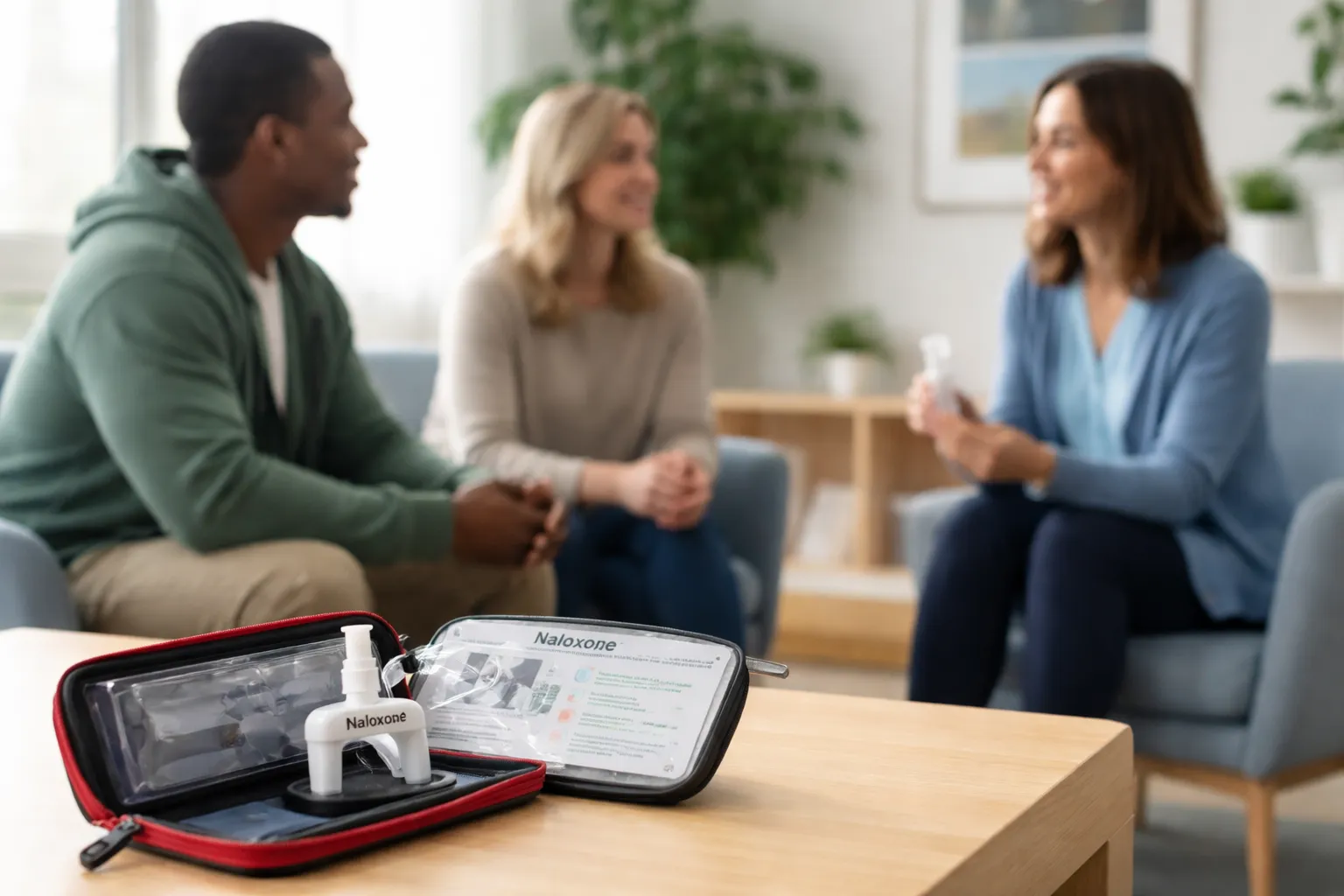
Naloxone remains the recommended opioid antagonist for suspected nitazene or other opioid overdose. However, because nitazenes can be highly potent and are sometimes combined with other sedating substances, multiple naloxone doses may be required to restore breathing. Emergency medical services should be called after administering naloxone, even if breathing returns. In-hospital care may require repeated doses or continuous infusions of naloxone and advanced respiratory support. (dea.gov)
Implications for outpatient detox and medication-based treatment
Outpatient detox and medication treatment remain key interventions that reduce overdose risk. Medications for opioid use disorder (MOUD) that are evidence-based include buprenorphine, methadone, and sustained-release naltrexone. Choosing among treatments depends on a clinical assessment, patient preferences, medical comorbidities, and local regulations and availability. Placement and medication decisions require assessment by a qualified clinician. (ncbi.nlm.nih.gov)
Buprenorphine initiation in the era of potent synthetic opioids
Because buprenorphine is a partial opioid agonist with high receptor affinity, standard induction (waiting until moderate withdrawal) can sometimes cause precipitated withdrawal in people who have recently used very high potency opioids such as fentanyl or nitazenes. To reduce this risk, clinicians may use alternative induction strategies such as low-dose buprenorphine initiation, commonly called microdosing or the Bernese method, or modified home induction protocols. These approaches are increasingly used in outpatient settings, but protocols vary, and clinical supervision is required. (pmc.ncbi.nlm.nih.gov)
Methadone and naltrexone
Methadone is an effective full agonist treatment that requires enrollment in a licensed opioid treatment program and close monitoring. Naltrexone, an opioid antagonist, requires the patient be fully detoxified from opioids before initiation to avoid precipitated withdrawal. Decisions about methadone or naltrexone should be individualized and made with experienced clinicians. (ncbi.nlm.nih.gov)
Practical considerations for outpatient programs
- Assess overdose risk on intake: ask about recent nonprescription fentanyl, counterfeit pills, and possible exposure to other synthetic opioids. Encourage carrying naloxone and train on its use. (dea.gov)
- Offer medication treatment promptly: rapid linkage to buprenorphine or methadone reduces overdose risk. For patients with recent exposure to potent synthetics, discuss microdosing options with a clinician experienced in these protocols. (ncbi.nlm.nih.gov)
- Coordinate care: involve primary medical care, mental health, and social supports. For pregnant people, adolescents, or those with severe withdrawal, seizures, psychosis, or respiratory compromise, arrange urgent or specialized care. (pmc.ncbi.nlm.nih.gov)
- Use local drug-checking and toxicology resources where available, recognizing that many standard panels may miss nitazene analogues. Advocate for broader testing when indicated. (cdc.gov)
Decision table: emergency care actions for suspected opioid overdose
| Situation | Immediate actions | Notes |
|---|---|---|
| Unresponsive and not breathing | Call 911, start CPR or rescue breathing, give naloxone if available, position airway, continue until EMS arrives | Naloxone may require repeat dosing; EMS can provide advanced airway and continuous naloxone infusion if needed. (ncbi.nlm.nih.gov) |
| Slow breathing, very small pupils, difficult to wake | Administer naloxone, monitor breathing, place in recovery position, call 911 | Repeated naloxone doses are sometimes necessary with potent synthetics. Observe until fully recovered and EMS arrives. (ncbi.nlm.nih.gov) |
| Sobering after naloxone but still sedated | Transport to ED for observation; consider social supports and linkage to MOUD | ED evaluation can assess need for naloxone infusion, oxygen, and initiation of MOUD or referral. (ncbi.nlm.nih.gov) |
Frequently asked questions
Are naloxone kits still effective for nitazene overdoses?
Yes, naloxone is the recommended antidote for opioid overdose, including nitazenes, but multiple doses may be required. Always call 911 for a suspected opioid overdose. (dea.gov)
Can a standard drug screen detect nitazenes?
Many routine urine or point-of-care drug screens do not detect nitazene analogues. Specialized laboratory testing, including forensic toxicology panels, is needed to identify many nitazenes. Public health surveillance and clinical laboratories are expanding detection but gaps remain. (cdc.gov)
Should outpatient programs change intake policies because of nitazenes?
Programs should maintain overdose prevention practices: offer naloxone, screen for recent exposure to synthetic opioids, provide rapid access to MOUD, and consider induction strategies that reduce precipitated withdrawal risk. Program-level coordination with local hospitals, laboratories, and public health is important. Treatment and placement decisions should be individualized by clinicians. (ncbi.nlm.nih.gov)
Sources
- Pharmacologic Characterization of Substituted Nitazenes, NCBI PMC. (pmc.ncbi.nlm.nih.gov)
- Alkoxy chain length governs nitazene potency, NCBI PMC. (pmc.ncbi.nlm.nih.gov)
- DEA Public Safety Advisory on emerging synthetic opioids. (dea.gov)
- MMWR: Nitazene-related deaths, Tennessee 2019-2021, CDC. (cdc.gov)
- Treatment of Opioid Use Disorder, Clinical Practice Guidance, NCBI Bookshelf. (ncbi.nlm.nih.gov)
- New Jersey report on evolving drug threats (includes nitazene discussion). (nj.gov)
Next steps and how this provider can help
If you or a family member is using nonprescribed opioids or has experienced an overdose, consider seeking a confidential clinical assessment. Outpatient programs can arrange same-day intake for medication options when possible, provide naloxone and training, and coordinate care. For information about treatments, locations, or to speak with an admissions team, see our treatments page, locations page, or contact us. Placement and medication choices require a clinical assessment by a qualified provider; this article does not replace clinical judgment.
For immediate emergencies, call 911. For mental health or suicide crisis, call or text 988. If you are concerned about a recent overdose exposure, seek emergency care right away.
This article uses current authoritative public health and peer-reviewed sources for education only. It is not a substitute for individualized medical evaluation. It was not clinically reviewed by a named clinician.
Confidential next step: If you would like a confidential assessment or want to speak with our admissions team about outpatient detox or medication treatment, request an assessment or contact us today. No pressure, just help finding options that may fit your needs.